
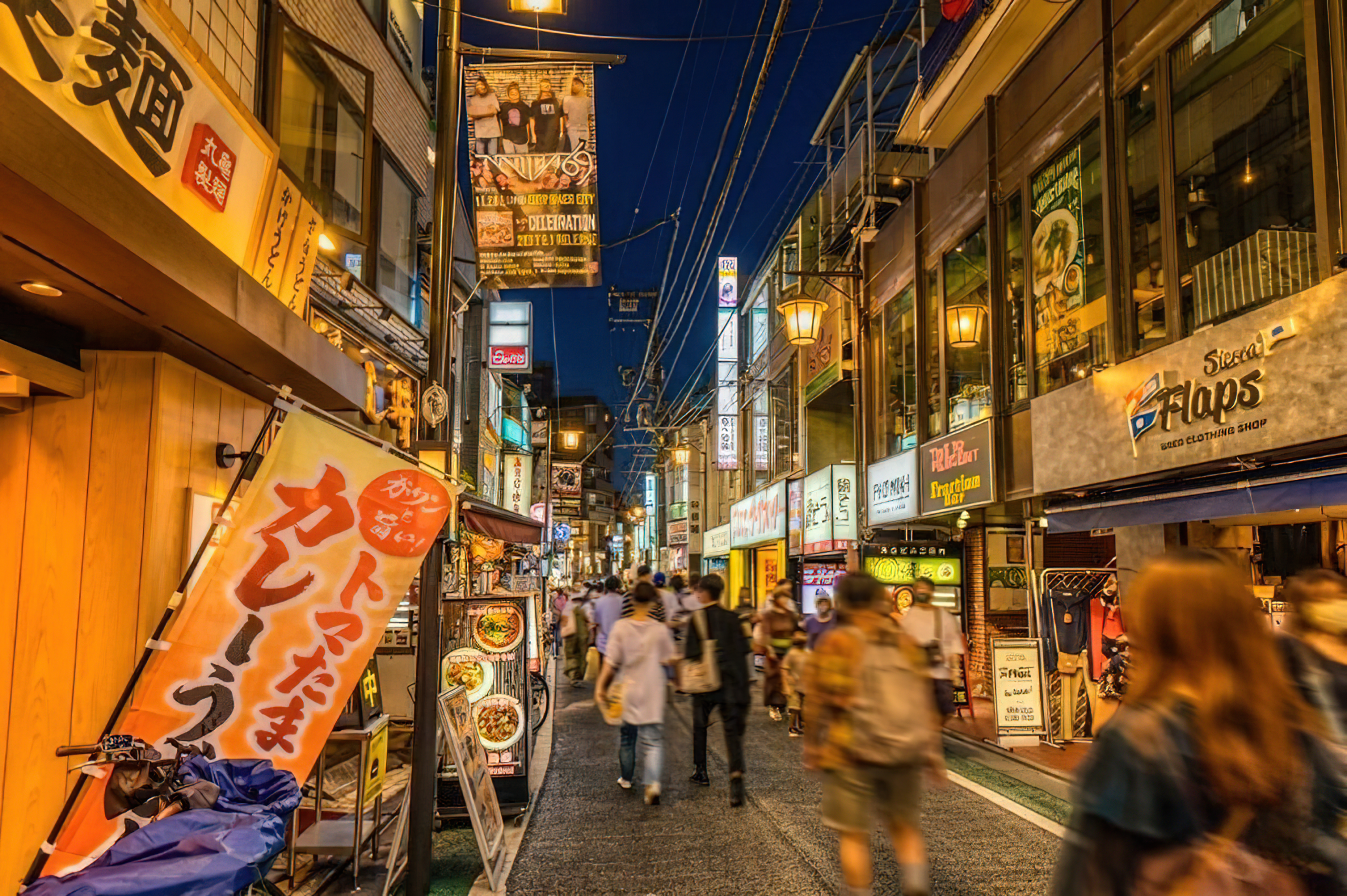
Shimokitazawa is small enough to see in a day and dense enough to fill one. This is a local’s plan for a full day in the neighborhood, from morning coffee to a late live show, with everything inside a ten-minute walk. Follow it start to finish, or lift the parts that suit you. Either way, the goal is to move at the neighborhood’s pace, not race a checklist.
Is one day enough for Shimokitazawa?
Yes. One day is enough to eat, shop, and catch live music in Shimokitazawa, because the whole neighborhood fits inside a walkable square. What one day will not do is show you everything. There are more than a hundred vintage shops and dozens of live houses, and nobody sees them all in a visit. The neighborhood is not a list of sights, it is a mood, and a day is enough to fall into it. Pick one lane through the four things the area does best, coffee, curry, vintage, and live music, and you have a full day. A half-day gets you two of the four, usually a curry lunch and an afternoon on the racks. The evening is the part worth protecting, so plan the day around getting back here after dark.
How the neighborhood is laid out
Shimokitazawa is a tangle of narrow lanes around one station, split into a north and a south side, with a strip of new shops along the old railway. Two train lines cross here, the Keio Inokashira line toward Shibuya and the Odakyu line toward Shinjuku, and the station sits in the dead center of everything.
The map has changed in the last few years. When the Odakyu line was moved underground, the freed-up land along the tracks became a chain of low-rise developments: Reload and Bonus Track, plus the Mikan Shimokita complex right by the station. These are the calm, curated side of the neighborhood. All around them the old Shimokitazawa survives, the car-free lanes packed with secondhand shops, curry counters, tiny bars, and small theaters. The south side is the densest for shopping and food. The theaters and live houses thread through both. Nothing is more than about ten minutes on foot, so knowing the north-south split mostly saves you from doubling back.
How should you plan your day?
Start late, plan around a midday curry and an evening show, and let the order flex because nothing is far. Most shops open around 11am, so the morning is for coffee, not racks. From there the day almost builds itself: lunch when the curry counters open, the secondhand lanes through the afternoon, and live music after dinner. A few things are worth knowing before you set out:
- The area is tiny and walkable, so you will not need trains once you arrive.
- Most shops open late, around 11am or noon, which makes mornings best for coffee.
- Carry cash for small shops, stalls, and bars, where cards are not always taken.
- The evening is the highlight, so save time and energy for after dark.
| Time | What to do | The scene |
|---|---|---|
| Morning, 9 to 11 | Coffee and a slow start | Specialty cafes, quiet lanes |
| Midday, 12 to 2 | Soup curry lunch | Backstreet counters |
| Afternoon, 2 to 6 | Vintage and record digging | Secondhand lanes, rail-side shops |
| Evening, 7 to late | Dinner, then live music | Izakaya, live houses, theaters |
Morning: coffee and a slow start
Use the morning for coffee, before the shops open around 11am. Shimokitazawa takes its coffee seriously, with small specialty roasters and quiet cafes that are running long before the racks are. The north side is the classic place to start, home to Bear Pond Espresso, a tiny shop with a cult following and a line that forms early. While the lanes are still empty, walk the green path along the old railway, the calmest the neighborhood gets all day. Take a pastry, find a counter, and let the place wake up around you. For where to sit, see our guide to the area’s cafes and coffee.
Midday: curry in the backstreets
By noon, eat soup curry, the lunch Shimokitazawa is famous for. The neighborhood holds one of Tokyo’s densest clusters of curry counters, most of them soup curry shops where you choose your broth, your heat, and your rice. It is a fast, cheap, and genuinely local meal, usually 1,200 to 1,800 yen, and it sets you up for an afternoon on your feet. Go before the lunch rush builds, because the best counters draw lines and the seats are few. If you visit in October, the streets host one of Japan’s biggest curry festivals, a stamp-rally crawl across more than a hundred shops. Pick a counter from our curry and food guide.
Afternoon: vintage, records, and the rail-side shops
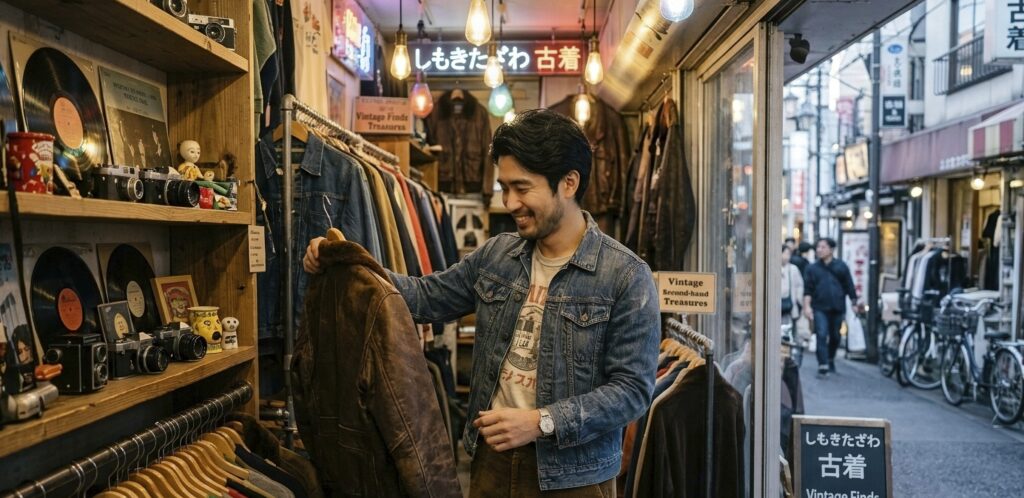
Give the afternoon to the racks, when the secondhand shops are open and freshly stocked. Shimokitazawa is Tokyo’s vintage capital, with more than a hundred used-clothing stores, plus record shops, used bookstores, and small galleries tucked between them. The trick is pacing. Work the big floors first for volume, then the alley boutiques, and try not to fill your bag in the first hour. When the lanes get tiring, the curated shops along the old railway are a calmer browse, and many stores offer tax-free shopping if you bring your passport. Carry cash for the smaller stalls. Our vintage and thrift guide covers the stores worth your time.
Evening: live music, theater, and izakaya
After dark, Shimokitazawa becomes one of Tokyo’s best nights out, built on tiny live houses and small theaters. This is a theater town, anchored by Honda Gekijo and a cluster of little stages, and it is also home to legendary basements like Shelter and Club Que. A live-house night is easy to join: you pay a small cover, usually with a drink ticket, and catch three or four bands you have never heard. Dinner is whatever izakaya you wander into between sets, so eat in pieces rather than one sit-down meal. Keep half an eye on the clock, because the last trains run around midnight and the night will tempt you to miss them. Find a show in our live music and theaters guide.
What’s the best walking route?
Loop from the north side for coffee, drop south for curry and vintage, and finish near the live houses by night. The station splits the neighborhood, but the two sides are only a few minutes apart, so this is less a map than a rough order. Walk it like this:
- Morning: start on the quieter north side with coffee and a slow wander along the old railway.
- Midday: cross to the south-side backstreets, about five minutes, for a curry lunch.
- Afternoon: work the vintage lanes around the south and east exits, looping back through the rail-side shops.
- Evening: settle near the live houses and izakaya by the tracks, where the night runs latest.
How do you adapt the day?
Short on time, or stuck in the rain? The day folds down to a half-day, an evening, or an indoor loop without losing its character. The neighborhood is forgiving because everything sits so close, so you can cut the plan in half and still feel like you saw it. Match your version to what you have:
| If you have | The plan |
|---|---|
| Half a day | Pick two: a curry lunch and an afternoon of vintage. |
| Evening only | Arrive around six, eat izakaya, then catch a live show. |
| A rainy day | Stay under cover: the rail-side complexes, arcades, a long cafe, and a theater. |
| The family in tow | Daytime only: the open rail-side decks, parks, cafes, and easy shopping. |
When should you visit?
Come on a weekday for calm shops, or a weekend evening for the fullest live-music lineup. The trade-off is simple: quiet browsing against the best nights out. The season matters too, since the neighborhood throws several street events worth timing a visit around. A few pointers:
- Weekdays: the calmest shops and the shortest curry lines.
- Weekend evenings: the busiest streets and the strongest live-music nights.
- Autumn: cooler walking weather, the October curry festival, and September’s Moon Art Night.
- Check ahead: some small shops and live houses close one weekday each week.
Getting there and around
Shimokitazawa is 3 to 5 minutes from Shibuya and about 7 from Shinjuku, and once you arrive everything is on foot. Two lines serve the station, the Keio Inokashira from Shibuya and the Odakyu from Shinjuku, so it is an easy hop from either hub with no buses or transfers. The neighborhood opens straight out of the exits, and your only real logistics are choosing an exit and watching the last train home. For routes, fares, and which exit to use, see our guide on how to get to Shimokitazawa.
This itinerary is one part of our complete guide to Shimokitazawa. Use it as a frame, then go deeper on the parts you like most, whether that is the food, the racks, or the music.