
Shimokitazawa is the best neighborhood in Tokyo for vintage and secondhand shopping. More than a hundred used-clothing stores sit within a ten-minute walk, from warehouse-sized floors to single-rack closets. This guide covers the shops actually worth your time, how the local furugi scene works, what things cost, and how to shop a full afternoon without burning out.
Why Shimokitazawa is Tokyo’s vintage capital
Shimokitazawa holds one of the world’s densest clusters of secondhand clothing shops, built over decades of Tokyo subculture. The neighborhood grew up around small theaters, live music, and student rents in the 1960s and 1970s, and that crowd wanted cheap, individual clothing, not chain-store racks. Used shops filled the narrow, car-free lanes, a few doors apart, and never really left.
The scale is the draw. You can hit a dozen serious shops in an afternoon and never walk more than a few minutes between them. Most are independent and owner-run, so the buying is personal and the stock turns over fast. Half the fun is the store you did not plan to find. The other half is that nothing here looks like a mall.
What is furugi, and why is Japanese vintage so good?
Furugi is the Japanese word for secondhand clothing, and Japan’s resale culture is unusually careful about sourcing, sorting, and condition. The word covers everything from a 500 yen used tee to a museum-grade jacket, but the standard of presentation is consistently high. Clothes are cleaned, repaired, graded, and hung with the kind of attention most countries reserve for new retail.
A lot of the best stock is American. Japanese buyers have spent decades flying to the United States and shipping back container loads of denim, military surplus, college sportswear, and workwear, then selling it at a premium to collectors who know exactly what they are looking at. Japan helped build the global market for vintage Levi’s and old band tees, and that expertise shows on the racks here. Price tracks rarity and condition, not just age, so a faded 1970s sweatshirt can cost more than a modern designer one.
On tags and signs you will see a handful of terms worth knowing. Furugi just means secondhand. Vintage is reserved for older, collectible pieces. Deadstock means old but never worn. Bihin marks excellent condition. Junk is sold as-is, for repair or parts. Learn those five words and you can read a shop in seconds.
The vintage shops worth your time
Start with a few anchor shops that, between them, cover every budget and style. The neighborhood has well over a hundred, but these six give you the full range, from a 700 yen tee to a piece you will frame.
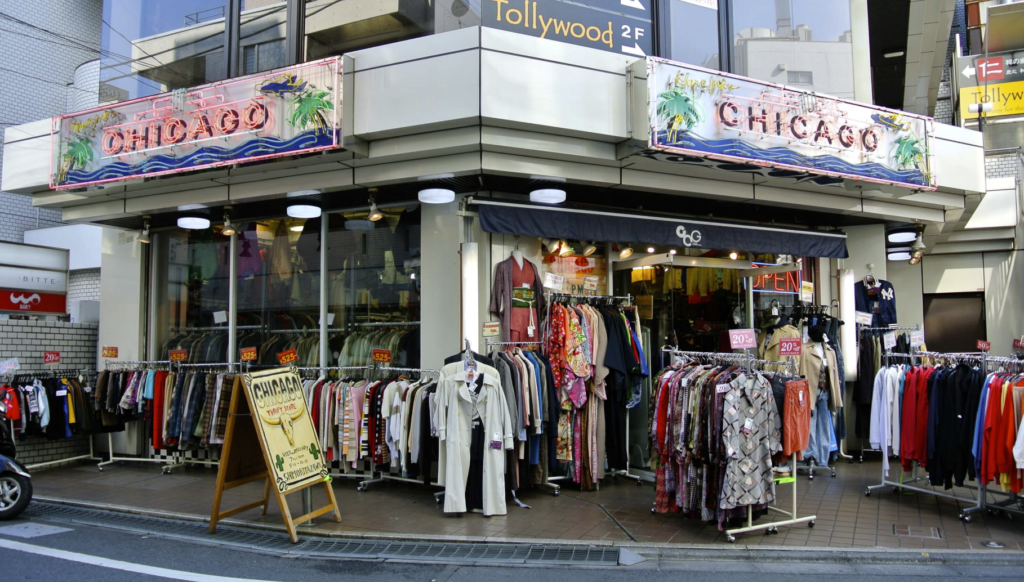
For variety and value, start big. Chicago is one of the largest shops in the area, stacked with reasonably priced brands, true vintage, and a well-known kimono and yukata corner that draws visitors on its own. Flamingo is the American vintage specialist, restocked by a US-based buyer, strong on mid-century menswear and womenswear plus retro accessories. Both are easy first stops that reward a slow browse.
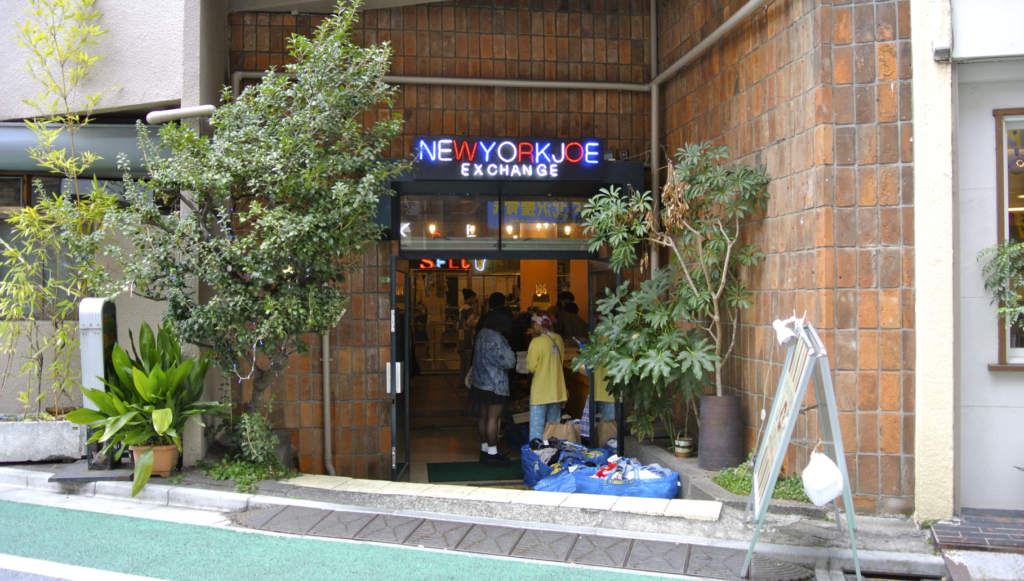
For bargains, work the concept shops. New York Joe Exchange sits in a former public bathhouse, an eclectic buy-sell-trade store running from streetwear and leather to the occasional designer scarf, with regular markdown days that locals time their visits around. Stick Out is the flat-price option, where most racks sell at a single low price, often under 1,000 yen, and you dig for the win.
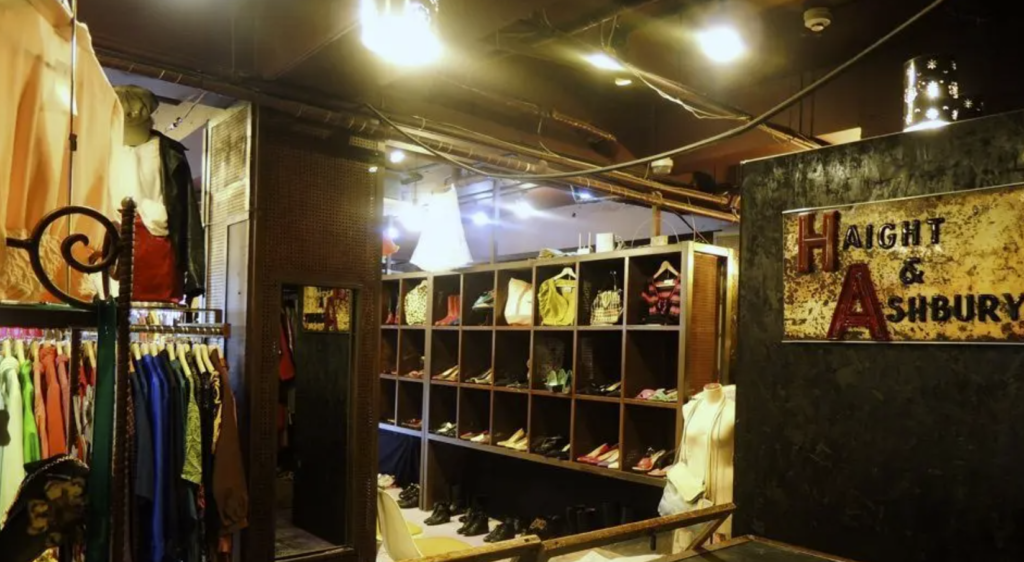
For rare and high-end, finish slow. Haight & Ashbury is the top of the market, with carefully chosen 19th and 20th century pieces and the occasional collector’s grail. Toyo Hyakkaten is different again: a covered arcade packed with small independent stalls, so you browse many sellers at once and never quite know what you will turn up.
| Shop | Type | Best for | Price |
|---|---|---|---|
| Chicago | Big store | Variety, kimono and yukata | Low to mid |
| Flamingo | American vintage | Mid-century US style | Mid |
| New York Joe Exchange | Exchange store | Streetwear, sale days | Low |
| Stick Out | Flat-price bargain | Cheap basics by the armful | Low |
| Haight & Ashbury | High-end vintage | Rare collectible pieces | High |
| Toyo Hyakkaten | Stall arcade | Browsing many sellers at once | Low to mid |
How much does vintage cost in Shimokitazawa?
Prices run from under 1,000 yen for a basic tee to well over 50,000 yen for rare designer or collectible denim. That spread is the point. You can dress a whole outfit for the price of one fast-fashion shirt, or spend serious money on a single jacket. Rough bands to expect:
- Basic tees and shirts: about 1,000 to 3,000 yen.
- Jackets, knitwear, and standard denim: about 3,000 to 12,000 yen.
- Designer, rare vintage, and collectible denim: 15,000 yen and well up.
Two things hold the bills down. Many shops offer tax-free shopping to tourists, which waives the consumption tax on larger purchases, and the bargain stores price aggressively to move stock. Carry cash for the smaller shops and stalls, where cards are not always welcome.
What the racks don’t tell you
A few things separate a good haul from a wasted afternoon, and most are not printed on any tag. These are the details regular shoppers take for granted.
Stock moves on a rhythm. Many shops restock midweek as new shipments are unpacked, so a Tuesday or Wednesday often beats a picked-over Sunday. Sizing is the other trap: Japanese vintage runs small, and old labels are unreliable, so a tagged “large” can fit like a modern medium. Measure or try on, never trust the number. The bargain shops also play games in your favor, from flat-price racks to scheduled markdown days, and knowing which shop does what turns a casual browse into a plan. Finally, the real premium sits in three categories, vintage denim, US military, and faded graphic tees, where condition and rarity, not brand, set the price. A frayed 1980s tour shirt can outprice a clean modern coat, and to the right buyer it is worth every yen.
How do you shop the neighborhood like a regular?
Go on a weekday afternoon, carry cash, bring your passport for tax-free, and judge clothes by fit, not by the label. The mechanics matter as much as the shops, and getting them right saves you both money and a wasted trip across town. Keep this short checklist in mind:
- Hours: most shops open around 11am or noon and run until 8pm or later.
- Cash: smaller shops and stalls still prefer it, even where cards are accepted.
- Tax-free: bring your passport, since many stores waive consumption tax on purchases over a set amount.
- Sizing: Japanese vintage runs small and old labels lie, so check measurements and try things on.
- Haggling: not the custom here, so do not push on price.
Planning a half-day vintage route
You can cover the best of the scene in an afternoon if you move from big shops to small ones. Start broad and cheap, end rare and slow, and leave room in your bag. This is a shopping route, not a sightseeing plan, so build it into a wider day if you want more than racks.
- Start near the station around midday and hit the big floors first, Chicago and Flamingo, for volume and quick wins.
- Work the bargain and concept shops next, New York Joe Exchange and Stick Out, when staff have just put out fresh stock.
- Finish in the high-end rooms and the stalls, Haight & Ashbury and Toyo Hyakkaten, for the one piece you will actually remember.
When is the best time to go thrifting?
Weekday early afternoons are calmest, and many shops restock midweek and run regular markdown days. Shops open late and weekends get crowded, especially the alley boutiques where two people make a line. Spring and autumn bring the strongest seasonal stock as buyers refresh the floors, and some shops post their best discounts at the end of a season to clear space. If you only have a weekend, go right at opening, before the racks are picked over.
Getting to the shops
Shimokitazawa Station is about 4 minutes from Shibuya and 7 from Shinjuku, with shops clustered around the south and east exits. The two sides of the tracks each have their own feel, and the newer Reload and Bonus Track developments have added a more curated set of shops near the station. For exact routes and fares, see our guide on how to get to Shimokitazawa.
This guide is one part of our complete guide to Shimokitazawa. Pair an afternoon of shopping with where to eat in Shimokitazawa or a slow neighborhood cafe, or fit it into a full one-day itinerary.