The Shimokitazawa Curry Festival is one of Japan’s biggest curry events, a stamp-rally crawl across more than a hundred shops every October. For about ten days, the whole neighborhood turns into a single curry trail you eat your way through, one small bowl at a time. This guide covers what it is, why it exists, how it works, the curry you can try, and how to get through it without overeating.
What is the Shimokitazawa Curry Festival?
The Shimokitazawa Curry Festival is an annual October event where over a hundred local shops serve festival curry, eaten stamp-rally style. It has run since 2012 and grown into one of the largest curry events in the country. You buy a pass, hop between shops eating smaller portions, and collect stamps as you go. Even cafes and bars that never normally serve curry join in with one-off specials, so for a week and a half the whole area becomes a single, sprawling curry crawl. It is less a single event in one place than a season the entire neighborhood takes part in.
Why does Shimokitazawa have a curry festival?
Because Shimokitazawa is a curry town, and the festival both celebrates and advertises one of the densest curry scenes in Tokyo. Long before the festival, the neighborhood had an unusual concentration of small, independent curry shops, heavy on soup curry, the kind of places that live or die on a single recipe. Local shopping-district groups launched the festival in 2012 to put that reputation on the map, and it worked: the event grew quickly into one of Japan’s biggest, and it tied the words Shimokitazawa and curry together in a lot of people’s minds.
It matters that the festival is community-run rather than corporate. It is organized by the shops and the local associations, which is exactly the independent, slightly scrappy spirit that defines the neighborhood. The festival is the food version of what Shimokitazawa does with music and vintage: a lot of small operators, banding together, turning quantity and variety into the draw.
How the festival works
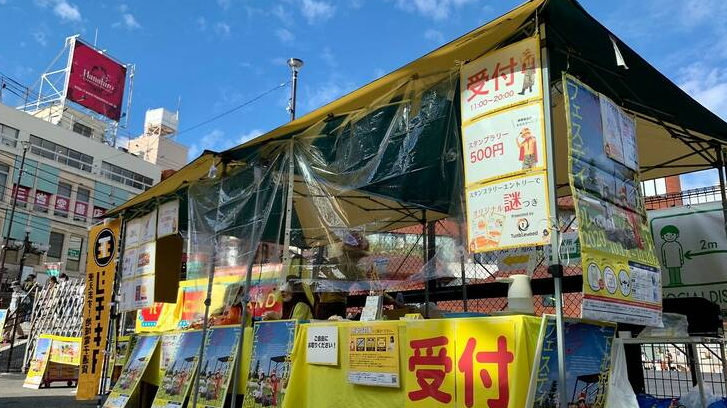
You buy a festival ticket book, then visit participating shops for smaller portions, collecting stamps as you go. The system is simple once you have the pass in hand:
- Ticket book: a festival passport that gets you festival-priced curry at participating shops.
- Participating shops: well over a hundred, marked with festival flags or window signs.
- Festival portions: smaller, festival-size servings so you can try several in one outing.
- Stamp rally: collect stamps as you eat, with prize draws for filled cards.
- Dates: roughly ten days each October, shifting a little from year to year.
What kind of curry can you try?
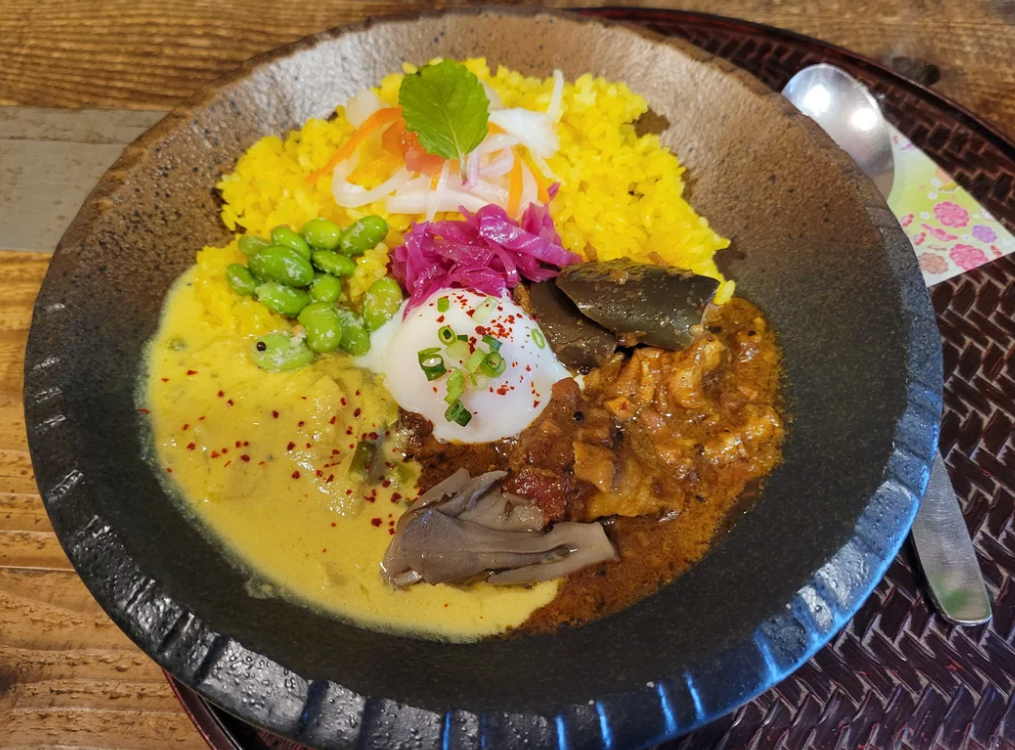
Everything from soup curry to dessert curry, because the festival pulls in shops that would never normally serve it. Soup curry is the local backbone, but the festival is when kitchens get experimental and non-curry places invent one-off dishes just for the occasion. That range is half the fun, and it is the best week of the year to taste how wide curry can go in one neighborhood:
| Style | What it is | At the festival |
|---|---|---|
| Soup curry | Spiced broth with vegetables and a protein | The local signature, everywhere |
| Spice curry | Drier, Tokyo style, often served aigake | Where the creative specials show up |
| Japanese curry rice | Thick, sweet, roux over rice | The comfort classic |
| International | Thai, Indian, and fusion takes | Plenty of one-off versions |
| Novelty and sweet | Dessert curries and odd experiments | Festival-only oddities |
How do you do the festival well?
Pace yourself, share portions, and plan a short route rather than chasing every shop. Trying to hit a hundred counters is a good way to ruin your appetite by noon, so a little planning goes a long way:
- Weekday lunches are calmest, while weekends and evenings are busiest.
- The famous shops draw real lines during the festival, so start early.
- The shop list and exact dates are published before each year’s run, so check ahead.
- Carry cash, since the smaller counters often prefer it.
- Pick a handful of shops in advance, mixing one famous name with a couple you have never tried.
- Share portions so you can hit more counters without filling up too fast.
- Space the day with a coffee or a walk between bowls, and stop before you are stuffed.
What it costs
The ticket book is cheap, and each festival portion costs only a small amount on top. You pay for the pass, then a few hundred yen per smaller bowl, which is the whole appeal: a day of curry across several shops for the price of one normal meal out. That low price is not just convenient, it is the point. It lets you gamble on a counter you have never heard of for the cost of a coffee, which is how most people stumble onto a new favorite.
Why the festival matters
The festival is more than a food event; it is how a neighborhood of small shops markets itself together. A few things make it work better than a normal restaurant week. It is run by the shops and local associations rather than a sponsor, so the money and the attention stay in the neighborhood. The small-portion format quietly does the heavy lifting, turning a whole district into one long tasting menu and giving tiny, new, or out-of-the-way shops a cheap shot at a first-time customer. That discovery engine is why regulars treat it as a chance to update their list, not just eat. And its success helped fix Shimokitazawa’s national image as a curry town, to the point that other neighborhoods have borrowed the idea. Strip away the stamps and the flags, and it is a clever piece of community marketing dressed as a party.
How it fits the neighborhood’s curry scene
The festival is the loud annual version of something Shimokitazawa does all year. The neighborhood is a curry hub every day, heavy on soup curry and small owner-run counters, and the festival simply concentrates that into a week and a half of crawling. If your trip misses the dates, you lose the stamp cards and the buzz, but not the curry: the shops are open anyway. For the year-round picture, with the specific shops and styles, see our curry and food guide.
How it fits the year’s events
The curry festival is one of several street events that fill Shimokitazawa’s calendar. If your visit lands at another time of year, there is usually something else on:
| Event | Season | What it is |
|---|---|---|
| Moon Art Night | September | Evening art and light festival |
| Curry Festival | October | A stamp-rally curry crawl |
| Tengu Festival | Late January to February | A traditional bean-throwing festival |
This guide is one part of our complete guide to Shimokitazawa. Build the festival into a full day with our one-day itinerary, or plan the trip in with how to get to Shimokitazawa.