
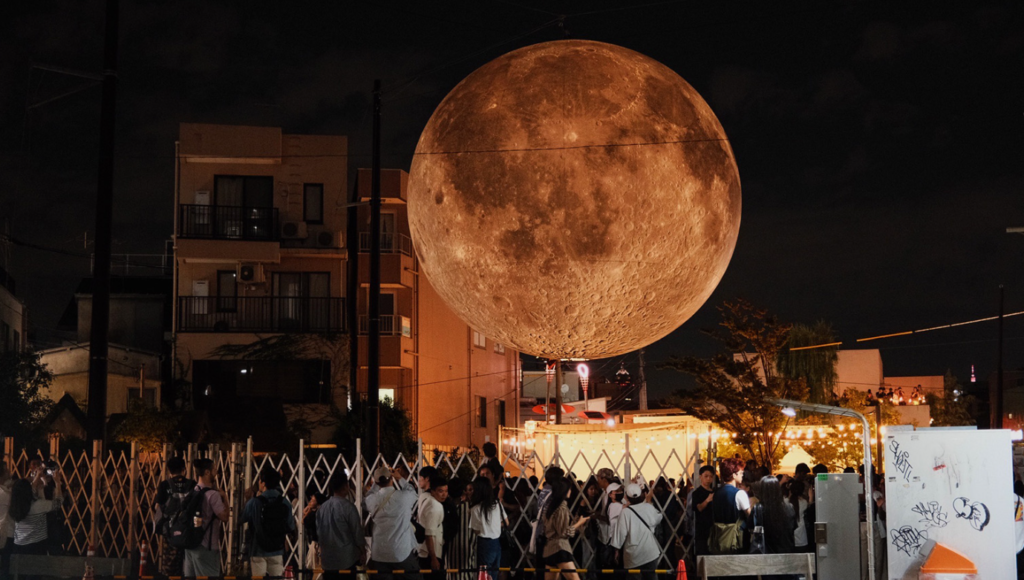
Moon Art Night is Shimokitazawa’s autumn light-and-art festival, when the streets fill with glowing installations under the harvest moon. For a few evenings in September, the walkable lanes turn into an open-air gallery you wander through after dark. This guide covers what it is, the tradition behind it, when and where it happens, and how to do it right.
What is Moon Art Night?
Moon Art Night is an evening art festival held across Shimokitazawa each autumn, built around light installations and the harvest moon. After dark, the neighborhood’s streets, shopfronts, and newer railway-side complexes host glowing artworks, projections, and small performances. Wandering them is free, and the whole thing is designed to be walked rather than watched from one spot. It is one of Shimokitazawa’s signature seasonal events, and the clearest example of how the neighborhood blends art into ordinary streets.
The moon-viewing tradition behind it
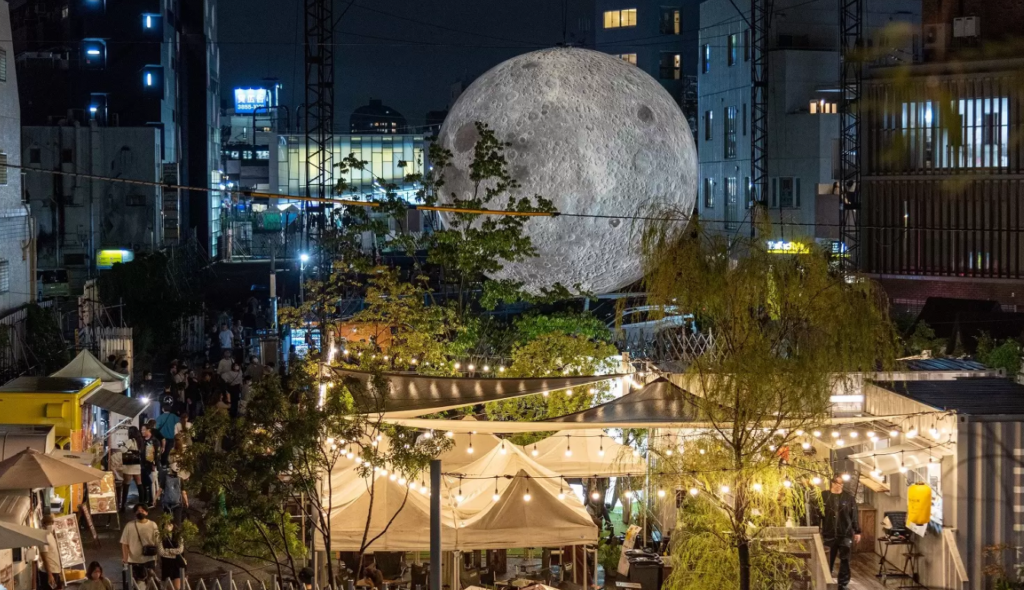
The festival draws on tsukimi, the centuries-old Japanese custom of admiring the autumn harvest moon. Tsukimi means moon-viewing, and it centers on the mid-autumn full moon, traditionally marked with offerings of round dango dumplings and tall susuki pampas grass as thanks for the harvest. Moon Art Night takes that quiet, contemplative ritual and reframes it as a contemporary art walk. The moon is the anchor, the art is the modern layer, and the result connects a fashionable night out to a tradition far older than the neighborhood around it.
When and where does it happen?
It runs over a few evenings in September, around the harvest moon, across the streets and new complexes of Shimokitazawa. Because it is timed to the moon, the exact dates move each year, so check before you plan a trip around it. The basics:
- Timing: a few evenings in September, scheduled near the mid-autumn full moon, so dates shift year to year.
- Where: throughout the lanes and shopfronts, and in the railway-side spaces like Reload and Bonus Track.
- Cost: wandering the installations is free, though some special events may be ticketed.
- Hours: an after-dark event, best from early evening onward.
What to expect on the night
Expect glowing installations, projected light, and pop-up performances scattered along the walking route. There is no single main stage; the event is spread through the neighborhood, so the point is to drift and stumble onto things. What you will find:
- Light and art installations along the streets and inside the new complexes.
- Projections and illuminated displays on shopfronts and walls.
- Small performances and music at points along the route.
- A festive, crowded evening walk rather than a sit-down show.
How do you make the most of it?
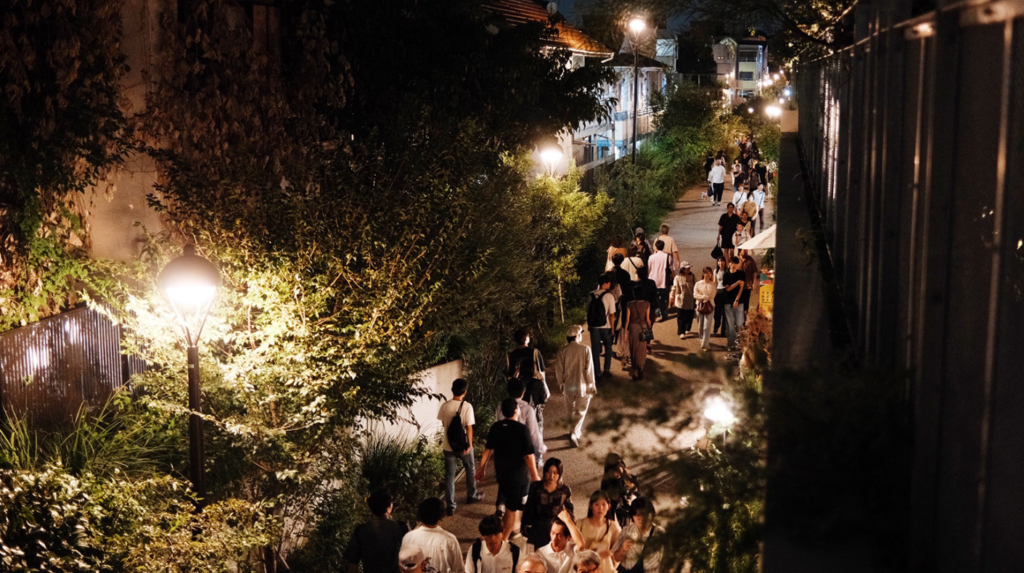
Come at dusk, walk the whole route on foot, and fold dinner into the evening. The festival rewards a slow loop rather than a rush to one highlight, so give yourself a couple of unhurried hours:
- Arrive around dusk, when the first installations light up and the crowds are still thin.
- Walk the route slowly, looping through the lanes and the railway-side complexes.
- Break for dinner mid-walk, since the neighborhood’s restaurants stay open right through it.
Getting there and around
Shimokitazawa is a few minutes from Shibuya and Shinjuku, and the whole festival is walkable from the station. There are no shuttles or special transport to plan, just the usual short train ride and then your feet. Evenings during the festival are busy, so allow a little extra time and patience in the crowds. For routes and exits, see our guide on how to get to Shimokitazawa.
How it fits the year’s events
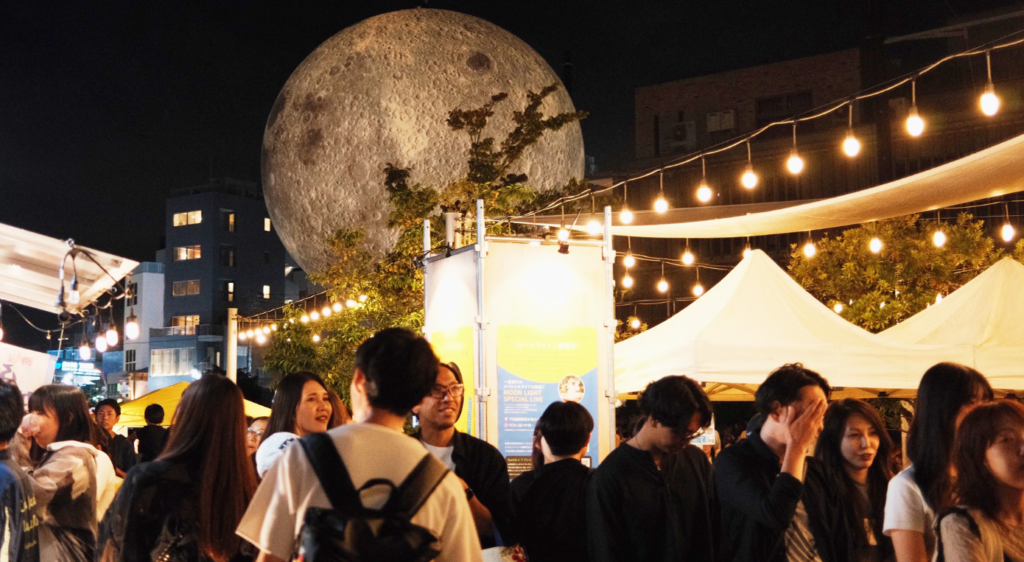
Moon Art Night is one of several street events that take over Shimokitazawa through the year. If your trip does not line up with it, the neighborhood usually has another festival not far off:
| Event | Season | What it is |
|---|---|---|
| Moon Art Night | September | Evening art and light festival |
| Curry Festival | October | A stamp-rally curry crawl |
| Tengu Festival | Late January to February | A traditional bean-throwing festival |
This guide is one part of our complete guide to Shimokitazawa. Build the festival into a full evening with our one-day itinerary.