The Shimokitazawa Tengu Festival is the neighborhood’s winter celebration of setsubun, when a giant red Tengu leads a bean-throwing procession through the streets. It is one of the area’s oldest traditions, a folk ritual that sits oddly and wonderfully next to its modern indie reputation. This guide covers what the festival is, the customs and folklore behind it, why a shopping street puts it on, and how to enjoy the day.
What is the Shimokitazawa Tengu Festival?
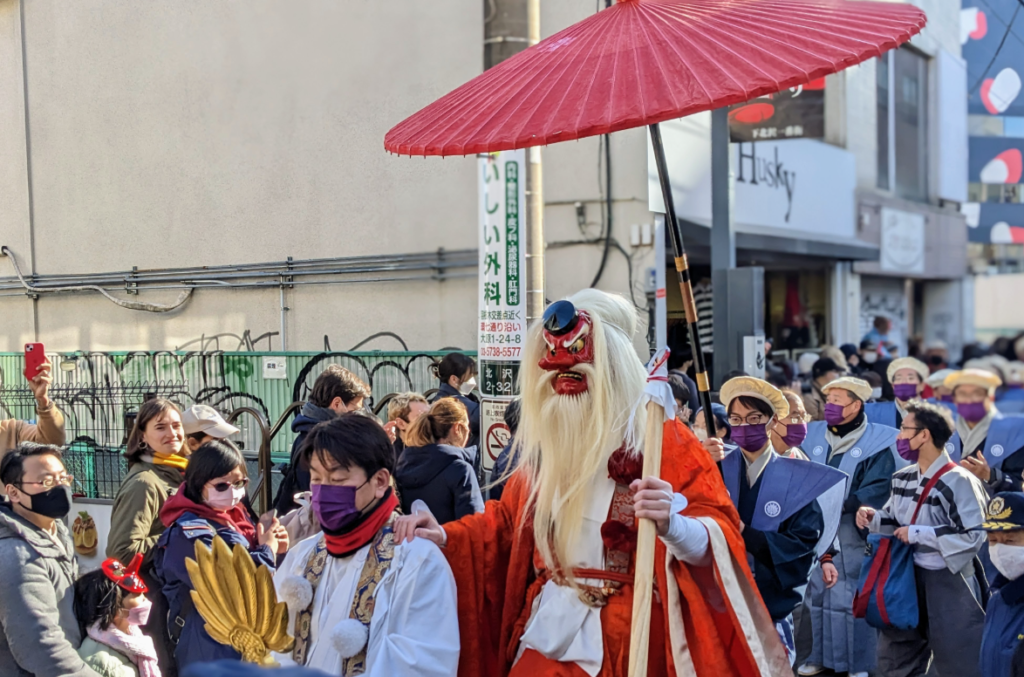
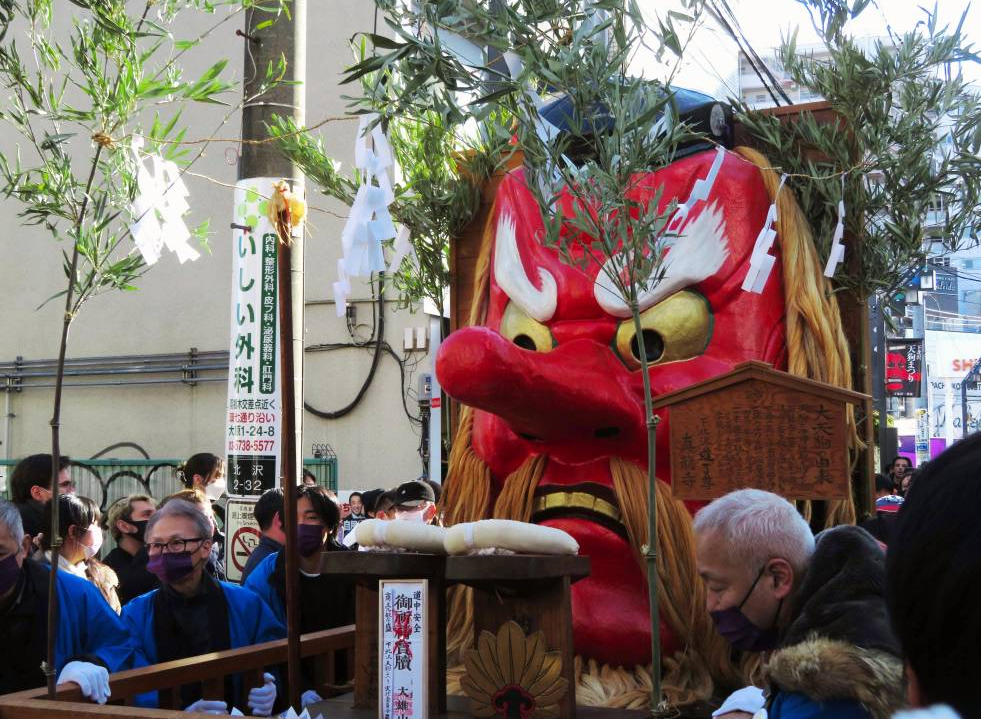
It is a winter street festival held around setsubun, in which a large Tengu figure parades through Shimokitazawa to drive out bad luck. A big, red-faced, long-nosed Tengu, a guardian out of Japanese folklore, leads a costumed procession along the shopping streets while beans are thrown to scatter misfortune for the year ahead. It is free, lively, and family-friendly, and it is rooted in old folk custom rather than commerce. In a neighborhood known for vintage and live music, the Tengu Festival is a reminder that Shimokitazawa is still an ordinary Tokyo community with traditions of its own.
What is setsubun, and why throw beans?
Setsubun marks the eve of spring in the old calendar, and people throw roasted soybeans to chase out demons and invite good fortune. The word means seasonal division, and it falls in early February, the day before risshun, the traditional first day of spring. That boundary between seasons was once seen as a moment when demons, the oni, could slip through, so the day became about clearing them out. The central custom is mamemaki, the bean throwing: people scatter roasted soybeans while chanting “oni wa soto, fuku wa uchi,” meaning demons out, fortune in, and then eat one bean for each year of their age, plus one more for the year to come.
It happens at every scale. Big temples hold mass bean-throwings where celebrities and sumo wrestlers fling beans to huge crowds, while most households do a quiet version at the front door. There are a few other customs worth knowing if you want to understand what the festival is reaching back to:
| Custom | What it is |
|---|---|
| Mamemaki | Throwing roasted soybeans to drive demons out and luck in |
| Fukumame | Eating beans equal to your age, plus one for the year ahead |
| Ehomaki | Eating an uncut sushi roll while facing the year’s lucky direction |
| Hiiragi-iwashi | A holly sprig and a sardine head set at the door to repel demons |
The tengu, the festival’s guardian
A tengu is a creature from Japanese folklore, a red-faced mountain spirit with a long nose, half guardian and half trickster. Tengu live in the mountains and forests of old stories, and they come in two classic forms: the red-faced, long-nosed daitengu most people picture, and an older crow-like karasu-tengu with a beak. They are tied to the yamabushi, the mountain ascetics, and to martial skill, and they are deeply ambivalent figures. In some tales they punish the arrogant and spirit away the careless; in others they are fierce protectors and even teachers of swordsmanship, as in the legend of the tengu who trained a young warrior on Mount Kurama.
It is the protective side that earns the tengu its place at the head of the procession. A being powerful enough to humble proud men can certainly scatter demons, so the Tengu becomes the neighborhood’s guardian for the year. The beans clear out the bad luck, and the Tengu makes sure it does not come back.
Why a shopping street holds it
Because neighborhood festivals like this are the social glue of a Japanese shopping street, not just a show for visitors. Local merchants’ associations, the people who run the shotengai, have long put on seasonal events to bind the community together and bring people out in slow stretches like deep winter. The Tengu Festival is the local shops doing something for their own neighborhood first and tourists second. It comes from the same community instinct as the autumn curry festival, only older and rooted in folk ritual rather than food. That is why it feels different from a staged attraction: it is a place looking after itself, and you are welcome to join in.
What happens on the day
A large Tengu leads a costumed procession through the streets, followed by a public bean-throwing. It is a moving event rather than a single stage, so the neighborhood itself is the venue. What to look for:
- The procession: a big Tengu figure parades along the shopping streets with a costumed retinue.
- The bean throwing: a public mamemaki, with beans and sometimes sweets tossed to the crowd.
- The crowd: families and onlookers line the route, reaching for thrown beans for luck.
- Festival food: winter stalls and the neighborhood’s restaurants warm up a cold afternoon.
When and where it happens
It is held around setsubun, in late January or early February, along the streets near Shimokitazawa Station. Because it follows the setsubun calendar, the exact date is set each year, so check before planning around it. The basics:
- Timing: around setsubun, so late January to early February, with the date fixed each year.
- Where: the shopping streets close to the station, all easily walkable.
- Cost: free to watch and to join the bean-catching.
- Dress warm: it is a winter event, often cold, and you will be standing outside.
How do you make the most of it?
Arrive early for a spot on the route, then follow the procession and stay for the beans. It is a short, busy event, so a little positioning goes a long way:
- Get to the route early and find a spot where you can see the Tengu pass.
- Follow the procession through the streets rather than waiting in one place.
- Stay for the bean-throwing, catch a few for luck, then warm up with festival food.
How it fits the year’s events
The Tengu Festival is the winter entry in a calendar of street events that run through Shimokitazawa’s year. Whenever you visit, there is usually something on:
| Event | Season | What it is |
|---|---|---|
| Moon Art Night | September | Evening art and light festival |
| Curry Festival | October | A stamp-rally curry crawl |
| Tengu Festival | Late January to February | A setsubun bean-throwing procession |
This guide is one part of our complete guide to Shimokitazawa. Build the festival into a full day with our one-day itinerary, or plan the trip in with how to get to Shimokitazawa.